
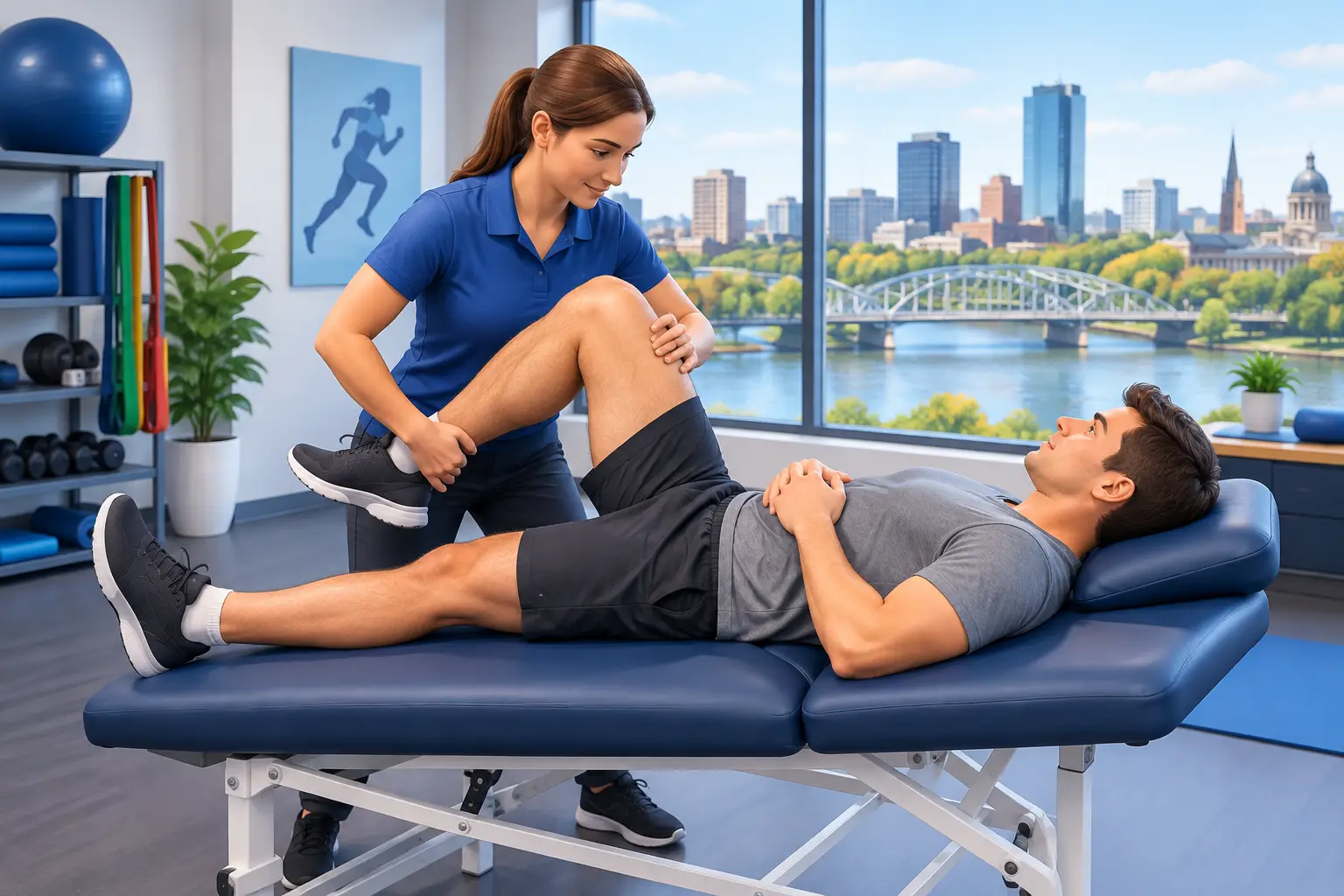
A sharp pain during a pickup game, a shoulder that will not settle after the gym, or a knee that feels unreliable on stairs can quickly change how you move through your week. Searching for sports injury physiotherapy london is often the first step, but meaningful recovery requires more than simply resting until the pain feels quieter. It requires a clear understanding of what was injured, how your body is compensating, and what it needs to return to activity safely.
At Happy Harmony Physiotherapy, care is built around the person behind the injury. Whether you are training for a race, playing recreational hockey, lifting weights, or trying to stay active with your family, treatment should support the goals that matter to you.
Sports Injury Physiotherapy in London Starts With the Right Assessment
Sports injuries are not limited to dramatic falls or collisions. Many begin gradually. A runner may develop heel pain after increasing mileage too quickly. A tennis player may notice elbow soreness after changing technique. A desk worker who trains after work may develop shoulder pain because tightness, workload, and lifting mechanics are all adding up.
A thorough assessment helps separate the source of pain from the factors keeping it going. Your physiotherapist will ask how the injury happened, what movements aggravate it, how it affects work and sleep, and what activities you want to return to. They will also assess movement, strength, joint mobility, balance, and sport-specific demands when appropriate.
This process matters because the painful area is not always the only area that needs attention. Knee pain, for example, may be influenced by hip strength, ankle mobility, training volume, or landing control. A sore shoulder may involve the shoulder blade, upper back, neck, and the way you reach or press overhead. Identifying these connections allows treatment to be specific rather than generic.
Common Injuries That Benefit From Physiotherapy
Physiotherapy can help with sudden injuries as well as persistent pain that has begun to limit your activity. Common concerns include ankle sprains, muscle strains, knee pain, Achilles tendon pain, plantar fasciitis, tennis or golfer’s elbow, hip pain, and low back pain related to sport or training.
Shoulder injuries deserve particular attention because the joint must be both mobile and stable. Rotator cuff irritation, instability, impingement-type symptoms, tendon pain, and recovery after shoulder surgery can all affect everyday tasks as well as sport. A plan should consider your range of motion, strength, control, and confidence in positions such as reaching, throwing, pressing, or hanging from a bar.
Concussion symptoms can also affect an athlete’s return to school, work, exercise, and play. Headache, dizziness, visual sensitivity, fatigue, and balance changes should be assessed carefully. Vestibular and concussion rehabilitation can provide a gradual, monitored path back to daily activity and sport when appropriate.
Treatment Should Match Your Injury and Your Goals
There is no single treatment that suits every sports injury. Early in recovery, the priority may be easing pain, protecting a healing tissue, and restoring comfortable movement. Later, the focus commonly shifts toward building capacity: strength, balance, coordination, power, and tolerance for the demands of your sport.
Hands-on therapy may help reduce discomfort and improve movement when used alongside active rehabilitation. Guided exercise is central because it gives you a practical way to rebuild strength and confidence between appointments. Depending on your needs, care may also include soft-tissue release, dry needling, acupuncture, therapeutic ultrasound, or shockwave therapy. These options can support recovery for some conditions, but they work best as part of a broader plan, not as a replacement for progressive exercise and load management.
For example, shockwave therapy may be considered for certain stubborn tendon conditions. It is not necessary for every injury, and it may not be suitable at every stage. Your physiotherapist should explain the expected benefit, the alternatives, and how the treatment fits your overall rehabilitation plan.
Why Rest Alone Is Not Always Enough
Rest can be useful immediately after an injury, especially when a movement causes sharp pain or swelling. However, extended complete rest can reduce strength and make the return to activity feel harder. The better approach is often relative rest: temporarily reducing or modifying the activity that aggravates symptoms while maintaining safe movement and fitness where possible.
If running hurts, you may need to reduce distance, avoid hills, or use cycling temporarily. If overhead pressing irritates your shoulder, lower-body training and pain-free pulling exercises may still be appropriate. The exact adjustment depends on the injury, your symptoms, and your training history.
A physiotherapist can help you distinguish between tolerable rehabilitation discomfort and warning signs that you are doing too much. Mild symptoms that settle promptly may be acceptable in some tendon and strength programs. Sharp pain, worsening swelling, repeated giving way, or symptoms that linger and intensify after activity deserve a reassessment.
Building a Safe Return to Sport
Feeling better is encouraging, but pain relief alone does not always mean the body is ready for full competition or previous training volume. A safe return is usually gradual. It considers how you move under fatigue, how the injured area responds the next day, and whether you can complete sport-specific tasks with control.
Before returning to higher-demand activity, your plan may address four practical areas:
- Comfortable range of motion for the movements your sport requires
- Strength that is appropriate for the injured area and the rest of your body
- Balance, coordination, and landing or change-of-direction control when relevant
- Gradual exposure to the speed, impact, load, and volume of your activity
An office worker returning to recreational volleyball may need a different progression than a competitive runner, even if both are dealing with knee pain. The goal is not to follow someone else’s timeline. It is to progress based on your current capacity and the demands you are preparing to meet.
Prevention Is Part of Recovery
Many sports injuries have more than one cause. A rapid jump in training volume, insufficient recovery, poor sleep, technique changes, weak links in a movement pattern, and an old injury can all contribute. This does not mean you did something wrong. It means prevention should be practical and personalized.
A useful prevention plan may include a short warm-up, focused strength work, mobility where it is genuinely needed, and a realistic progression in training load. For someone with recurring shoulder pain, that may mean improving shoulder blade control and gradually increasing pressing volume. For a runner with calf or Achilles symptoms, it may mean a structured calf-strength program and a more measured approach to mileage.
The best plan is one you can actually maintain. A 15-minute program performed consistently often helps more than an ambitious routine that is abandoned after a week.
When to Seek Help Promptly
Some injuries need medical attention urgently. Seek prompt assessment if you have a visible deformity, cannot bear weight after an injury, have significant swelling, experience numbness or weakness, suspect a fracture, or have severe pain that is not improving. After a head injury, worsening headache, repeated vomiting, confusion, loss of consciousness, seizure, or new neurological symptoms require urgent medical care.
For less urgent concerns, do not wait until pain has forced you to stop every activity you enjoy. Early physiotherapy can provide reassurance, a plan for modifying activity, and clear milestones for recovery. Same-day and late-week appointments can make it easier to begin care without putting life on hold.
Your body does not need perfection to move well again. With a thoughtful assessment, consistent rehabilitation, and progress that respects your goals, you can return to the activities that help you feel strong, capable, and connected.
Leave a Reply