
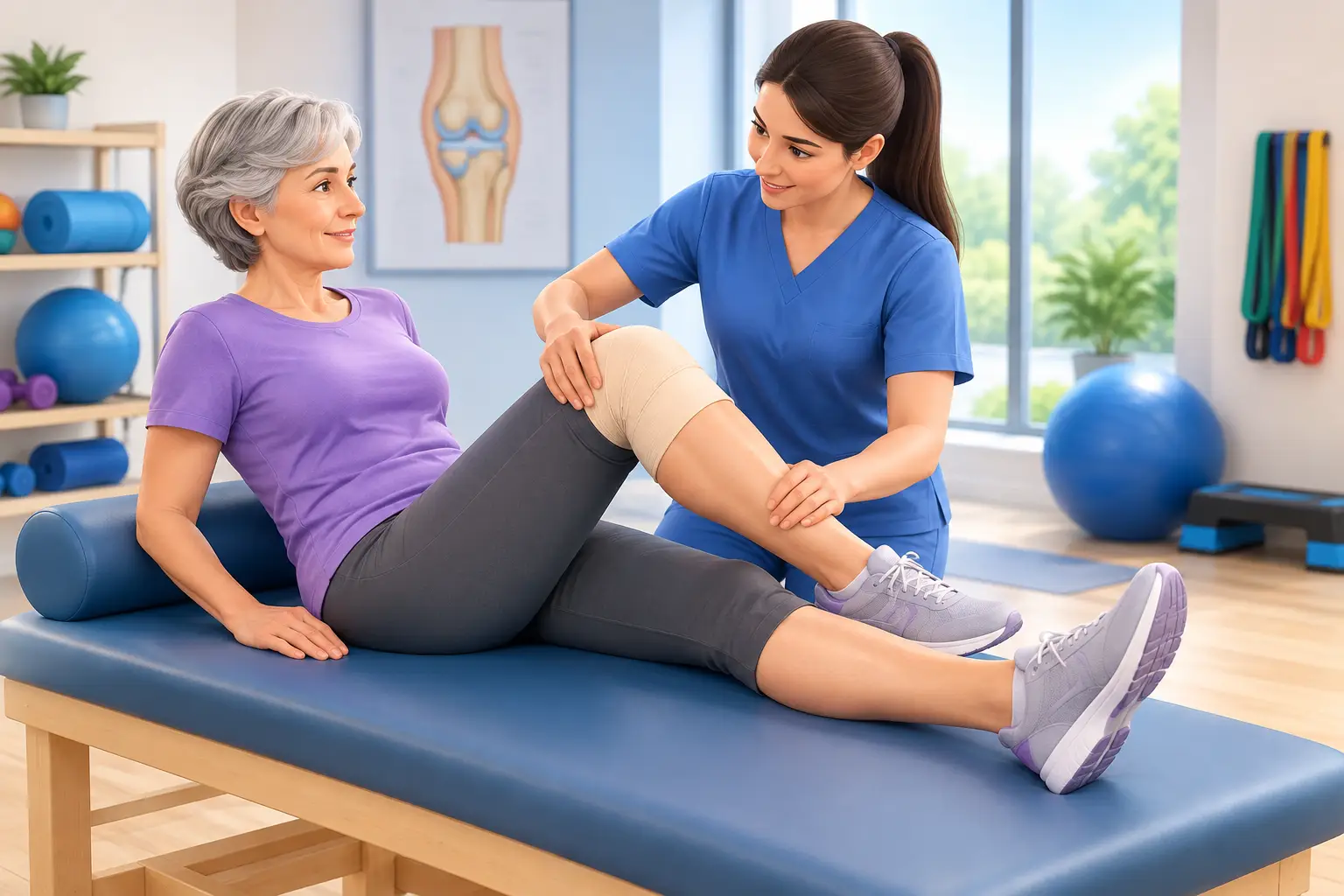
The first few weeks after a knee replacement can feel surprisingly demanding. Your knee may be sore, swollen, stiff, and unfamiliar, even when the surgery itself went well. Physiotherapy after knee replacement gives recovery a clear direction: protecting the new joint while steadily rebuilding the motion, strength, and confidence needed for daily life.
Recovery is not about pushing through every painful moment. It is about making consistent, appropriate progress with a plan that reflects your surgery, health history, home setup, and personal goals. Whether your priority is walking comfortably through your neighborhood, returning to work, climbing stairs, or getting back to the activities you enjoy, rehabilitation helps turn those goals into practical steps.
Why physiotherapy after knee replacement matters
A knee replacement addresses damaged joint surfaces, but surgery alone does not automatically restore muscle strength, flexibility, balance, or normal movement habits. Before surgery, many people spend months or years limping, avoiding stairs, or relying more heavily on the other leg. Those compensations do not disappear the day after an operation.
Early rehabilitation helps you gradually regain knee straightening and bending, reactivate the quadriceps muscles at the front of the thigh, and improve circulation. It also helps prevent the stiffness that can make walking and daily tasks harder. As recovery progresses, treatment shifts toward better balance, leg control, endurance, and safe movement during activities such as standing from a chair, navigating curbs, and using stairs.
The goal is not simply to achieve a number on a range-of-motion test. A useful recovery plan connects knee motion to function. Can you get in and out of bed more easily? Can you walk with less reliance on a cane? Can you handle a grocery trip without a major flare-up? These are meaningful markers of improvement.
What recovery often looks like
Every surgeon and hospital has its own protocol, and your care team’s instructions should always guide your activity level. Factors such as the type of replacement, whether you had additional procedures, your pre-surgery fitness, and any medical conditions can change the pace of recovery.
The early phase: movement, swelling, and safe walking
In the first days and weeks, the focus is usually on safe mobility. You may use a walker or cane while you practice putting weight through the leg as advised by your surgeon. Simple exercises often include ankle movements, gentle knee bending and straightening, quadriceps activation, and short, frequent walks.
Swelling management matters during this stage. An increase in swelling can make the knee feel tighter and more painful, limiting how well it bends or straightens. Your physiotherapist can help you balance movement, elevation, cold therapy when appropriate, and rest so that activity supports healing rather than causing a difficult setback.
It is normal to have discomfort during exercise, especially while working on a stiff knee. However, pain that steadily escalates, persists well after activity, or is accompanied by a major increase in swelling is a sign to adjust the plan. More exercise is not always better. The right amount is the amount your knee can recover from.
Building motion and strength
As the initial surgical soreness begins to settle, physiotherapy becomes more active. Your program may include targeted work for knee range of motion, walking mechanics, sit-to-stand practice, step exercises, and strengthening for the quadriceps, hamstrings, hips, and calves.
Hip and core strength are often overlooked, but they matter. Stronger hips can improve how your leg lines up when you walk, climb stairs, or rise from a chair. Better control through the whole leg reduces the tendency to shift too much weight onto the unoperated side.
Hands-on treatment may also be used when appropriate to address soft-tissue tightness and improve comfort around the knee, thigh, or calf. Guided exercise remains the foundation of recovery, because lasting improvement comes from helping your body move and load the new joint more effectively.
Returning to everyday activities
Many people become more independent with basic daily activities over the following weeks, but endurance can take longer to return. You may be able to walk short distances comfortably before you are ready for a long outing, uneven ground, or repeated flights of stairs.
Your physiotherapist can progress exercises to match real-life demands. For an office worker, that may mean tolerating a commute and getting up from a desk without stiffness. For an active adult, it may mean building the leg strength and control needed for hiking, cycling, golf, or a fitness routine. Higher-impact activities may not be recommended after a knee replacement, so it is wise to discuss your preferred activities with both your surgeon and physiotherapist.
The milestones that matter most
Recovery timelines can be helpful, but they should not become a source of pressure. One person may regain bending quickly but need more time to rebuild strength. Another may walk well early on but struggle with swelling after doing too much. Comparing your progress with someone else’s can be discouraging and is rarely useful.
Instead, look for trends: less reliance on a walking aid, easier transfers, improved knee motion, stronger leg control, and a better ability to recover after activity. Your physiotherapist should reassess these changes and update your program as your needs evolve.
A common challenge is achieving full knee straightening. Even a small loss of straightening can affect walking and make the muscles work harder. Knee bending is also important for stairs, sitting, and getting in and out of a car. Your rehabilitation plan should address both, rather than focusing only on the movement that feels most difficult.
How to make home exercises work for you
Home exercises are a central part of physiotherapy after knee replacement, but they need to be realistic. A long, complicated routine is less useful than a manageable plan completed consistently with good technique.
Choose a regular time of day, keep your exercise instructions visible, and use a stable chair or counter when practicing balance-based movements. Break activity into shorter sessions if one long session leaves your knee overly sore or swollen. Your physiotherapist can show you which sensations are expected and which indicate that an exercise needs to be modified.
Walking is valuable, but it is not the entire program. Walking alone may not restore the knee bend, knee straightening, and quadriceps strength needed for a smooth, confident gait. Specific exercises fill those gaps and help you progress beyond simply getting from place to place.
When to contact your medical team
Some discomfort, bruising, swelling, and disrupted sleep can occur during recovery. Still, certain symptoms require prompt medical advice. Contact your surgeon or seek urgent medical care for increasing redness or warmth around the incision, drainage from the wound, fever, sudden severe pain, chest pain, shortness of breath, or new calf pain and swelling. These symptoms should not be managed by trying harder with home exercises.
You should also let your physiotherapist know if pain or swelling repeatedly spikes after treatment, if the knee feels unstable, or if you feel stuck despite consistent effort. A thoughtful change in exercise dosage, walking support, or technique can make a meaningful difference.
Personalized support for a stronger recovery
The best rehabilitation plan respects both the science of tissue healing and the reality of your day-to-day life. At Happy Harmony Physiotherapy, care can combine guided exercise, hands-on treatment, mobility training, and clear education so you understand what each stage of recovery is working toward. Treatment is adjusted to your comfort, progress, and goals rather than following a one-size-fits-all routine.
A knee replacement is a major step toward less pain and better mobility, but recovery is built one movement at a time. With patient, consistent physiotherapy and a plan that fits your life, each small gain can become a more comfortable and capable return to the activities that matter to you.
Leave a Reply