
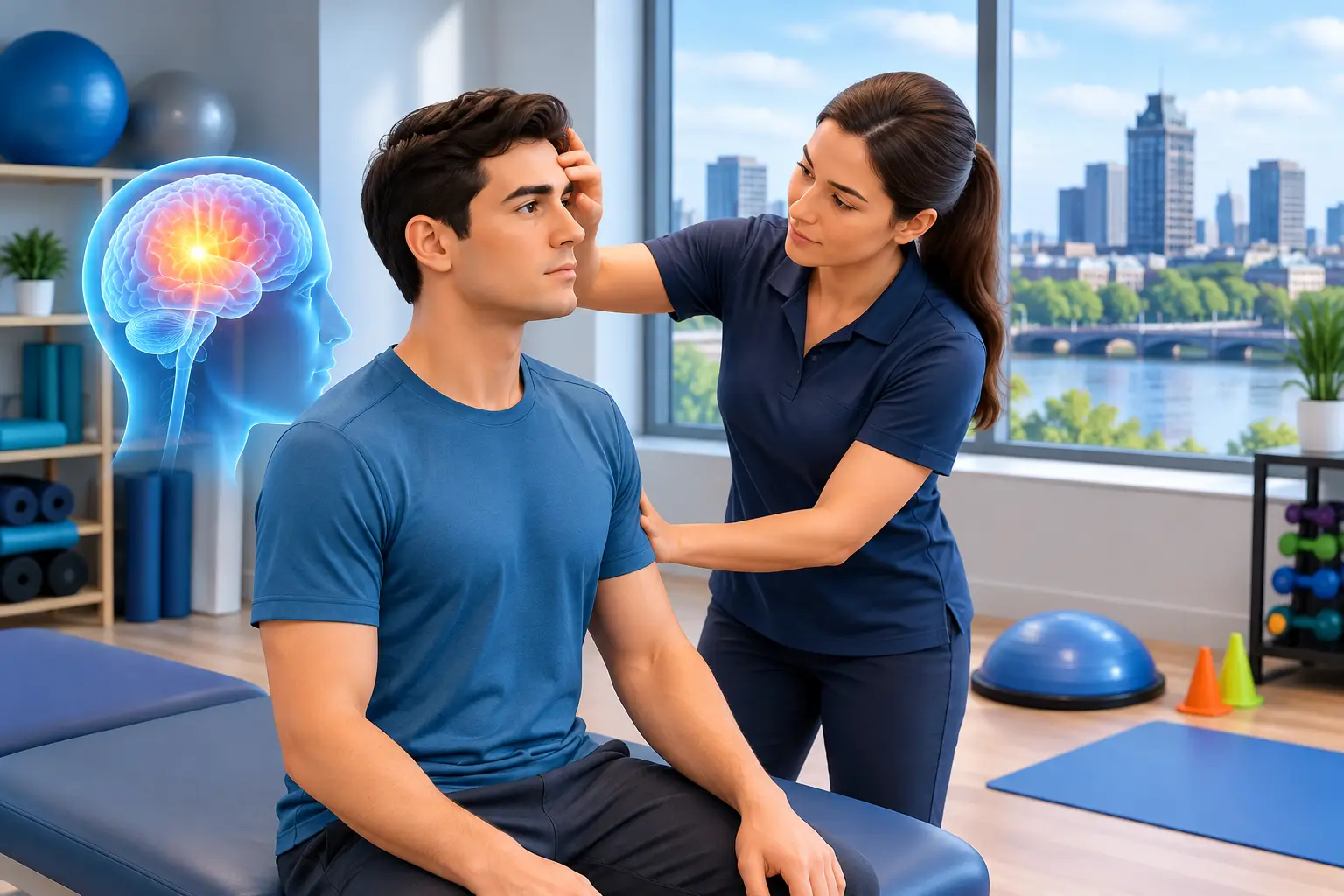
A concussion can make ordinary tasks feel unexpectedly difficult. Reading a screen, driving through busy traffic, attending a meeting, or walking through a grocery store may bring on headache, dizziness, fatigue, or a sense that your brain cannot quite keep up. Concussion rehabilitation London Ontario patients can access should be personal, paced carefully, and focused on the symptoms that are limiting real life.
A concussion is a mild traumatic brain injury, but “mild” does not describe how disruptive the symptoms can feel. Recovery is different for every person. Some people improve steadily within days or weeks, while others need more support with lingering symptoms affecting work, school, exercise, sleep, or family life. The goal of rehabilitation is not to push through symptoms. It is to help your system gradually tolerate the activities that matter to you.
What Concussion Symptoms Can Look Like
A concussion may follow a sports impact, a fall, a motor vehicle accident, a workplace injury, or any blow or forceful movement that causes the brain to move within the skull. Loss of consciousness does not need to occur for a concussion to be present.
Symptoms can change throughout the day and may not all appear immediately. Headache, neck pain, dizziness, nausea, blurred vision, sensitivity to light or noise, brain fog, poor concentration, irritability, sleep changes, and reduced exercise tolerance are all common concerns. Some people notice that symptoms rise only when they return to demanding tasks, such as computer work, lifting, running, or being in visually busy environments.
A thorough assessment helps identify the likely drivers behind those symptoms. For example, dizziness can be related to the vestibular system, the neck, vision and eye movement control, or a combination of factors. Headaches can also have more than one contributor. This is why a one-size-fits-all program often falls short.
When urgent medical care is needed
Rehabilitation supports recovery after appropriate medical evaluation. Seek urgent medical attention after a head injury if there is worsening headache, repeated vomiting, increasing confusion, unusual behavior, seizure, weakness or numbness, slurred speech, loss of consciousness, unequal pupils, or difficulty waking the person. These symptoms require prompt assessment rather than waiting for a rehabilitation appointment.
Why Rest Alone Is Not Always Enough
In the first period after a concussion, reducing activities that substantially worsen symptoms can be helpful. However, prolonged complete rest is not usually the path back to normal function. Too much avoidance can make people more sensitive to movement, exercise, screens, or everyday stimulation.
The better approach is relative rest followed by a gradual, guided return to activity. That means doing manageable amounts of physical, cognitive, and social activity without repeatedly triggering a major symptom flare. The right starting point depends on your symptoms, job demands, injury history, and current tolerance.
For one person, the first step may be a short walk with planned breaks. For another, it may be five minutes of computer work, simple eye movement exercises, or gentle neck mobility. Progress is measured by what your body can tolerate over time, not by whether you can force your way through a difficult day.
What Happens During Concussion Rehabilitation in London, Ontario
At Happy Harmony Physiotherapy, concussion and vestibular rehabilitation begins with listening carefully to how the injury has affected your day. Your physiotherapist may ask about the mechanism of injury, previous concussions, headache patterns, sleep, work or school demands, medications, exercise habits, and the activities that trigger symptoms.
The physical assessment may include posture and neck movement, balance, walking, eye tracking, visual motion tolerance, coordination, and a safe measure of exercise tolerance. This helps create a clearer picture of what needs attention. A person whose main challenge is neck stiffness and headaches will not need the same care plan as someone whose symptoms are driven by dizziness in busy visual settings.
Your plan may include hands-on physiotherapy for neck and upper-back restrictions, guided exercise, balance retraining, vestibular exercises, and education about pacing. If symptoms are aggravated by visual motion, specific eye and head movement activities may be introduced gradually. If exertion brings on symptoms quickly, a controlled aerobic program can build tolerance without exceeding your current capacity.
Care should be adjusted as you improve. Early exercises may feel surprisingly simple, but their dosage matters. Starting too aggressively can cause a setback, while staying at the same level too long can slow progress. Regular reassessment allows your plan to move forward at a pace that is challenging but manageable.
Treating the Neck Matters After a Concussion
Neck injuries commonly occur at the same time as concussions, particularly after a fall, collision, or sudden whip-like movement. The neck can contribute to headache, dizziness, visual discomfort, and reduced concentration. If it is overlooked, recovery may be harder than it needs to be.
Physiotherapy can address painful or limited movement in the neck, shoulders, and upper back through appropriate hands-on treatment and active rehabilitation. Gentle mobility work, strengthening, posture guidance, and movement retraining may all have a role. The exact approach depends on the injury, your comfort, and any findings from your medical assessment.
This is also where individualized care makes a practical difference. An office worker may need strategies for laptop positioning, meetings, and screen breaks. An athlete may need graded drills that restore confidence with faster movements and changing directions. Someone recovering from a motor vehicle accident may need a plan that considers neck pain, anxiety around driving, and a gradual return to work duties.
A Safe Return to Work, Sport, and Daily Life
Returning to activity is not an all-or-nothing decision. A structured progression allows you to rebuild tolerance while watching how symptoms respond. For work, that could mean shorter shifts, quieter tasks, scheduled screen breaks, or temporary limits on heavy lifting. For sport, it usually begins with light aerobic exercise and advances through sport-specific activity before any return to contact or risk of another head injury.
The timing depends on the person and the activity. Someone may feel well during a quiet morning but struggle after a full day of multitasking. That information is useful, not a failure. It helps refine the plan.
Communication can also reduce stress during recovery. Clear documentation and practical recommendations may help people discuss temporary accommodations with an employer, coach, school, or family. The aim is to keep you participating in life safely where possible, rather than withdrawing from everything you value.
What You Can Do Between Appointments
Small, consistent habits often support rehabilitation better than occasional bursts of effort. Keep a simple record of activities and symptoms so you can recognize patterns without monitoring every sensation. Maintain regular sleep and meal routines as much as possible, stay hydrated, and follow the activity level recommended by your health care provider.
Avoid using symptoms as a reason to either do nothing or do everything. If an activity causes a mild, short-lived increase that settles with rest, it may be an appropriate part of graded recovery. If symptoms become intense, last for hours, or worsen day after day, the activity may need to be adjusted. Your physiotherapist can help you find that middle ground.
It is also reasonable to ask questions. You should understand why an exercise is prescribed, what response is expected, and when to progress it. Clear explanations can make recovery feel less uncertain, especially when symptoms are invisible to others.
Support That Respects Your Pace
Concussion recovery is not a test of toughness. It is a process of restoring confidence in your movement, concentration, balance, and daily routine while respecting what your nervous system can handle today. With evidence-based assessment, targeted rehabilitation, and a plan built around your goals, steady progress is possible.
If you are still dealing with headaches, dizziness, neck pain, or difficulty returning to your usual activities, a focused assessment can provide a practical next step. Recovery often starts with identifying one activity you miss and building a safe path back to it.
Leave a Reply